
"burn treatment"
1000 article(s) found

Special and rare Coffee treatment method in the World: a brief introduction to Stone-roasted Coffee
Talking about its baking mechanism, the stone roasting coffee roaster is about the same as the ordinary hot air roaster in appearance, but the internal structure is different. First of all, there is a net between the charcoal fire and the stone pot in its closed hot blast stove, which is separated by a layer of unique ore in Gifu Prefecture, Japan, and secondly, its stone pot is different from ordinary boilers, which is made of two-layer punched iron mesh, in the middle of the iron net.

What coffee varieties are mainly grown in Ivorian coffee? Robusta coffee grown in C ô te d'Ivoire
Professional coffee knowledge exchange more coffee bean information please follow the coffee workshop (Wechat official account cafe_style) what coffee varieties are mainly grown in Ivorian coffee? What are the advantages of robusta coffee grown in C ô te d'Ivoire? Arabica coffee beans are mainly produced in South America (except parts of Argentina and Brazil), Central America, Africa (Kenya, Ethiopia and Russia).

Brazilian South Minas Coffee Bean Flavor Taste Treatment Grind Scale Variety Introduction
Old bourbon coffee is grown on a number of estates in Cerrado, Minas Greais state, in southeastern Brazil. These estates, such as Capin Branco Estate and Vista Allegre Estate, grow old varieties of bourbon coffee

Country: water washing treatment variety Heirloom in G2 Sidamo, Ethiopia
Today, there are still a large number of wild Arabica coffee trees growing in many parts of Ethiopia, averaging between 4200 and 6800 feet above sea level. Now there is a trend of small cultivation, generally planting banana trees for shade at the same time, but due to lack of agricultural technology, herbicides and pesticides are less used. Coffee is Ethiopia's main economic crop and the largest in the country.

A brief introduction to the feature treatment method for describing the flavor and taste of high-altitude Antigua boutique coffee in Guatemala
Guatemala has seven main coffee producing areas: Antigua (Antigua), Cobain (Coban), Lake Attilan (Atitlan), Vevetnango (Huehuetenango), Farahan Plateau (Fraijanes), Oriente (Oliente) and San Marco (San Mareos). Each region has its own climate change, so each producing area has its own coffee beans.

What brand of Brazilian coffee has a good flavor? an introduction to the regional treatment of manor production.
Brazil is vividly compared to the giant and monarch of the coffee world. There are about 3.97 billion coffee trees there, and small farmers now grow 75% of Brazil's total coffee production. The number of coffee producers in Brazil is twice or even three times that of Colombia, the second largest coffee producer in the world. Unlike in the past, Brazil's economy is now less dependent

Flavor description treatment of Ethiopian coffee beans with very light flavor characteristics
Production area: Sidamo varieties: Native Arabica treatment: washing flavor: moderate sweet and sour sun berry aroma, citrus aroma, slightly fermented fruit aroma, fruit wine flavor. Palate: comfortable and interesting sour fruit, good sweetness and low thickness. Baking degree: medium baked Ethiopia Sidamo G2 (Ethiopia Sidamo G2): Sidamo production area is located in Ethiopia

Characteristics of Nicaraguan coffee beans introduction of manor production area by grinding scale treatment method
The suitable climate provides an excellent growth environment for the cultivation of coffee. The mineral-rich pozzolanic soil provides abundant nutrients for the cultivation of coffee trees. High-quality Nicaraguan coffee is also grown in the northern and central highlands of the country. The best coffee is produced in Matagalpa (Matagalpa), which is highly respected by coffee lovers all over the world.

Brazilian Coffee Flavor Description Grind Scale Production Region Variety Treatment Taste Introduction
Unlike in the past, Brazil's economy is now less dependent on coffee, which accounts for only 8 - 10% of GDP. Before World War II, Brazil accounted for 50 percent or more of the world's coffee production, and now it's close to 30 percent, but the country's influence on coffee worldwide, especially on coffee prices, has been significant, as two frosts in 1994 caused global coffee prices to rise.

Introduction to the production area of grinding scale for the quality characteristics of Guatemalan coffee flavor description treatment
The Coffee Volcano of Guatemala once destroyed this once-prosperous capital in an instant, taking away all its prosperity and beauty overnight. After this subversive mountain city, the splendor has disappeared for more than 200 years, and Antigua has never swaggered again. After being dull, Antigua is now run by the last remaining Indians. These hard-working and strong seals

Introduction of Variety characteristics of Flavor description and Grinding Calibration treatment of Vietnamese Coffee beans
Drinking coffee is a daily habit of Vietnamese. Vietnamese cafes are very common, not high-spending places, and ordinary coffee is only a few yuan RMB. Vietnamese coffee is not brewed in a coffee pot, but a special dripping coffee cup, followed by an old-fashioned printed glass, drop by drop to pass the time. Drop on the cup holder below when you do it.

Boutique Coffee cooked beans Solar treatment of Vera sa in Shumawa Manor in the western valley of Costa Rica
Country: Costa Rica Grade: SHB extremely hard Bean producing area: Western Valley Orange County altitude: 1670-1790 m treatment: sun varieties: Vera Saatchi producer: Shumawa Manor flavor: honey apples, dried berries, yellow fruit Costa Rica is located in the Central American isthmus, at the same time by the Pacific and Atlantic currents and sea breeze to regulate the climate, many in the territory
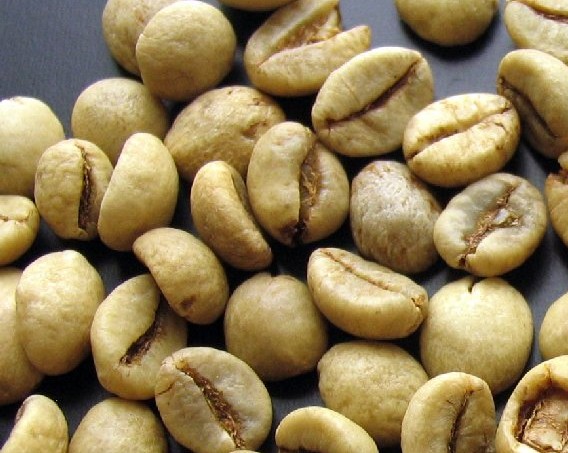
Robusta's secret.
[guide] "Robusta" coffee, commonly known as "thick beans", can be grown at low elevations (200 to 800 meters above sea level), has strong resistance to diseases and insect pests, is not vulnerable to agricultural pests, has a high annual output per unit area, and is harvested in large quantities by machine. in general, the cost of production is much lower than that of Arabica. "Robusta" coffee is commonly known as "stout beans", at low elevations (200 above sea level)

African Coffee Ethiopia sidamo Sidamo G2 Grade Water washing processed Fine Coffee cooked beans
Sidamo Washed G2 countries: Ethiopia Grade: G2 production areas: Sidamo production areas treatment: washed varieties: Heirloom Flavor: wild Ginger Flower, Honey, Citrus, Lemon there are still a large number of wild Arabica coffee trees growing in many parts of Ethiopia, with an average of 4200-6800 feet above sea level.

On the characteristics and uses of Robusta Coffee beans
"Robusta" coffee, commonly known as "sturdy beans", can be grown at low elevations (200 to 800 meters above sea level), has strong resistance to diseases and insect pests, is not vulnerable to agricultural disasters, has a high annual output per unit area, and is harvested in large quantities by machine. in general, the cost of production is much lower than that of Arabica coffee. "Robusta" coffee usually has an ordinary, rigid and pungent flavor, and because

Description and treatment of Kilimanjaro Coffee Flavor introduction of Variety Grinding scale
Fresh is the most important factor in buying Kilimanjaro coffee beans. There are several steps to judge whether the beans are fresh or not: 1. Grab a handful of coffee beans and feel whether they are solid beans with the palm of your hand. 2. Whether it is enough to smell the aroma close to the nose. 3. Put a bean into your mouth and bite it twice. There is a clear sound indicating that the bean is well preserved and not damp. If you want to buy a single item

Variety introduction of Yunnan Tieka Coffee with characteristic Flavor description and Taste treatment
Yunnan Tieka Coffee is a popular coffee produced in Central America, Jamaica and the West Indies. It is mellow, slightly sweet in bitterness, soft and smooth, and slightly sour. It can make the taste senses more sensitive and taste its unique taste. It is the best coffee. Alishan Mazu coffee belongs to

Description of the characteristics and Flavor of Brazilian Coffee beans introduction to the Grinding scale of the treatment method in the Manor
Brazilian Hirado coffee bean characteristic flavor description manor area treatment grinding scale introduces other kinds of Brazilian coffee, such as Rio, Parana, etc., which can be produced in large quantities because they do not need too much care, although the taste is rough, but it is a kind of good and cheap coffee, which has its own standard because it is distributed all over Brazil and its solid quality varies.

Introduction to the quality characteristics of Brazilian Yellow bourbon Coffee Flavor description treatment
Brazilian coffee has proved that Brazil is also capable of producing gourmet coffee and small batches of coffee. Local boutique coffee can not only be provided by small-scale coffee farmers. The main coffee producing areas in Brazil are Sulde Minas South Minas, Matas de Minas Minas Southeast Mountain Forest, Cerrado Hirado, Chapadas de Minas Minas Mausoleum, and Mogiana.

Mild aromas Brazilian coffee Flavor description Treatment characteristics Variety Taste
Coffee production has gradually become a science since the introduction of coffee trees from Guyane française in 1720. Before 1990, the Brazilian government strictly controlled the coffee industry, with both severe interference and price protection measures, and the state has always implemented minimum price protection measures for farmers, resulting in coffee overproduction. Before World War II, surplus stocks amounted to 780